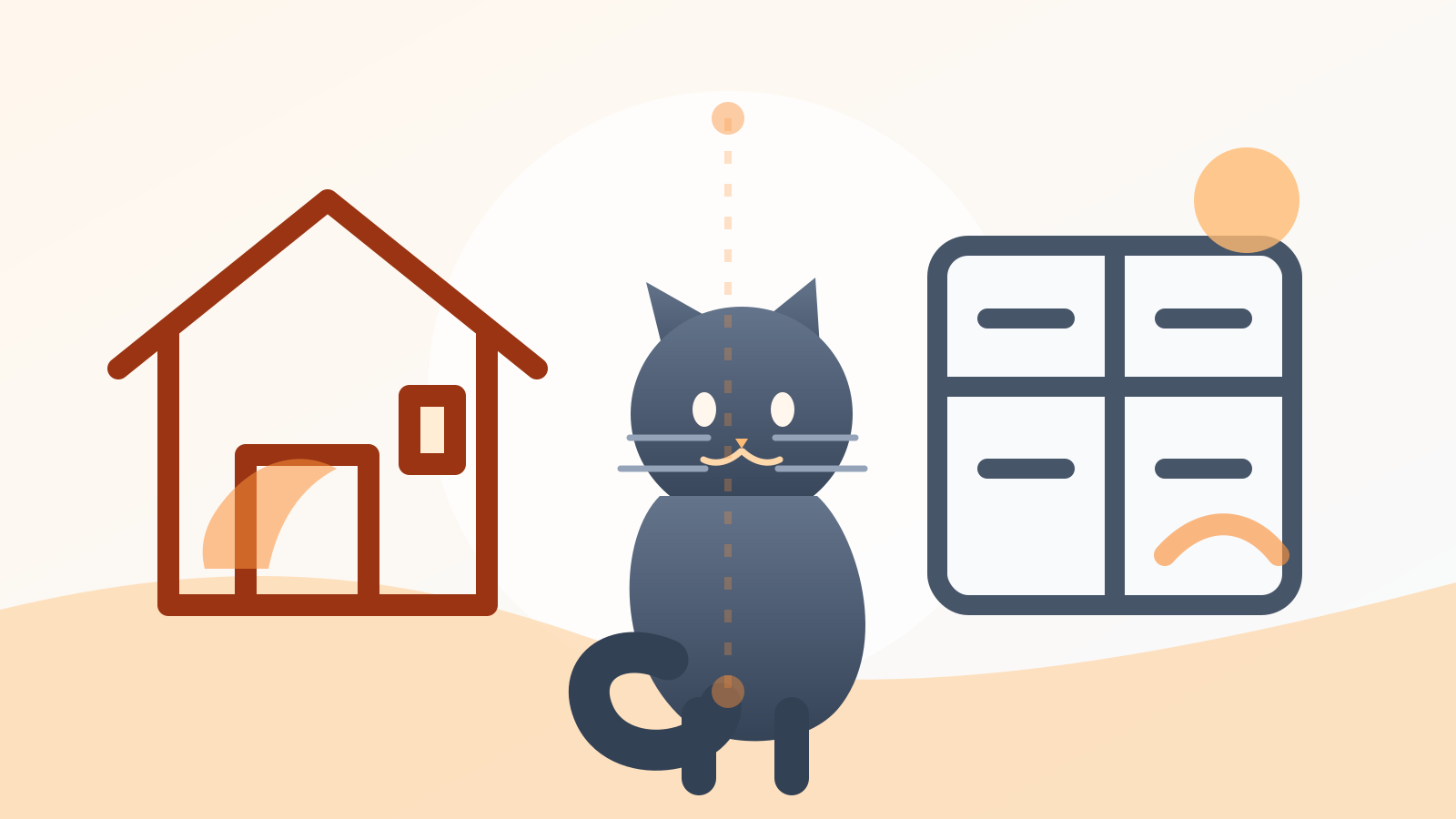
Cat Hotel or At-Home Care? A Decision Guide starts with the cat you have actually observed, not a rule about where cats should stay. Compare a cat hotel with at-home care through your cat's observed temperament, response to new places, daily routine, age, ongoing care notes, and length of stay.
Neither a cat hotel nor at-home care is universally right. Compare how your cat responds to unfamiliar places and people, how each option would carry the normal routine, and whether the written handoff can be followed throughout the stay.
Begin with your cat, not with the name of the service
There is no single care setting that suits every cat. A useful decision begins with behavior you have already seen: what happens around unfamiliar visitors, how the carrier affects the day, whether a new room leads to cautious exploration or prolonged withdrawal, and which familiar habit returns first after a disruption. Those observations are more dependable than a broad claim that all cats prefer one setting.
A cat hotel changes the surroundings and introduces a different caregiver. At-home care keeps the familiar layout and scents, but brings another person into the cat's territory and may divide care into visits. Neither description produces an automatic winner. The question is which set of changes your cat has handled more steadily and how clearly the provider can preserve the parts of the day that matter most.
Use past responses instead of a personality label
Words such as friendly, shy, or independent can hide important detail. A cat that greets guests may still need considerable time to settle in another building. A cat that avoids visitors at home may quietly explore a separate room once noise and contact are limited. Think back to a move, a visitor staying over, a carrier journey, or a previous care arrangement. Note the sequence: hiding, eating, drinking, using the litter tray, sleeping, and choosing contact.
Look for patterns rather than treating one difficult event as a permanent rule. If unfamiliar space has been the larger disruption, ask a cat hotel exactly how arrival, quiet time, and individual space work. If unfamiliar people entering the home have been harder, ask an at-home caregiver about an introduction, entry procedure, and how they respond when the cat does not seek interaction. These are planning questions, not predictions about the cat's character.
Map the ordinary day in five parts
Write the routine under five headings: food, water, litter, sleep, and contact. Record time windows rather than relying on vague phrases such as morning or evening. Include where bowls are usually found, how water is checked, when the litter area is normally cleaned, where the cat chooses to rest, and whether play or affection is usually initiated by the cat. The same routine map can then be discussed with both types of caregiver.
At-home care may preserve the physical setting, but visit timing and the intervals between visits still need to fit the cat's normal pattern. A cat hotel may have people nearby for more of the day, but the actual observation routine should be confirmed rather than assumed. In either model, the aim is not a promise that nothing will change. It is a shared understanding of what should remain consistent and how completed care will be recorded.
Add age and current care instructions without interpreting them
Kittens, adult cats, and older cats can have very different patterns of rest, play, movement, and social contact. Age alone does not point to a cat hotel or to care at home. It simply helps identify practical details that deserve a direct answer, such as access to a preferred sleeping place, use of stairs, a calm handling routine, or the timing of familiar meals.
If you already have a current written instruction for ongoing care, pass it on as written. Ask whether the business or caregiver can accept the task, who would carry it out, where completion is recorded, and how a missed step would be communicated. Do not ask a temporary caregiver to reinterpret the instruction. This guide offers no medical direction; it focuses on making an existing care note clear during handoff.
Treat length of stay as context, not a universal cutoff
The duration matters, but there is no number of days that settles the question for every cat. On a shorter stay, travel and arrival may make up a larger part of the experience. Over a longer absence, the repeatability of visits, daily observation, contact, and written updates may become more prominent. These are considerations to explore with both providers, not fixed rules that select one model.
Review whether the cat has stayed apart from you before, whether the caregiver is familiar, how much time the cat normally spends alone, and how the cat returned to routine after past changes. Give the same date range to each provider and request a sample daily sequence. A day-by-day outline is more informative than comparing the total number of nights in isolation.
Ask both providers the same core questions
A fair comparison uses one question set for the cat hotel and the person offering care at home. Matching questions reveal differences in actual practice without treating the service label as evidence that one side is automatically more suitable.
- When will food, water, and litter be checked, and where will each completed check be recorded?
- How will I be told if my cat hides, avoids contact, or behaves differently from the written baseline?
- How will quiet rest, preferred sleeping areas, and cat-initiated contact be handled?
- Who reads and carries out the age-related or ongoing care note, and how is completion confirmed?
- Who contacts me if the assigned caregiver changes or a planned visit or task cannot happen?
- Before handoff, can I review the space or entry routine and see an example of the daily update?
Prepare a one-page handoff note
A one-page handoff keeps essential information from disappearing inside a long conversation. Keep it current, specific, and easy to scan. Give the caregiver a copy and keep the same version yourself. At handoff, walk through it once and resolve any item that the business or caregiver cannot follow as written.
- The cat's name and age, carrier or entry routine, and the order of people to contact if plans change.
- Food type, portion, time window, water locations, and the cat's usual drinking pattern.
- Litter type and location, cleaning rhythm, and the cat's ordinary litter routine.
- Preferred sleep and hiding places, welcome forms of contact, and approaches the cat tends to avoid.
- Current care notes, where supplies are kept, who performs each task, and how it is logged.
- The update channel, what the short status note should cover, and the contact sequence for a changed plan.
Choose from written answers, not assumptions
Create two columns and enter the answers you actually receive. Each column should cover observed responses to new places or people, the five-part routine, age and current care notes, the proposed daily flow for the full stay, and the communication process. If an answer is missing, ask the relevant provider again instead of filling the gap with an assumption about hotels or home visits.
Petkonak does not take reservations or payments. Confirm hotel service conditions directly with the cat hotel business, and confirm the scope and working arrangements for at-home care directly with the caregiver. The goal is not to name a universal winner. It is to connect what you know about your own cat with a care plan that another person can understand and follow.
Continue with cat-specific pages
Use the cat hotel results to review relevant business profiles, or narrow the location through Izmir cat hotels. If a facility stay remains on your shortlist, the cat hotel selection checklist provides the next set of facility-specific questions.
Petkonak does not take reservations or payments. Confirm the actual service scope and arrangements directly with the cat hotel business or the at-home caregiver.
Continue your cat-care comparison
Petkonak does not take reservations or payments. Confirm the service scope directly with the cat hotel business or at-home caregiver.